
Shenandoah County Arrest Warrants Explained
An arrest warrant is the paper that lets an officer take a named person into custody. Before one issues in Virginia, a magistrate or another judicial officer reviews a sworn complaint and decides whether probable cause exists. That is only the start. The court named on the file controls every step that follows. Shenandoah County publishes no public, searchable warrant roster, so a quiet search result settles nothing. Virginia OCIS does offer public case information, but it is not a warrant certificate. If a Shenandoah County case record looks unclear, the court clerk or your lawyer can confirm the true status.
Shenandoah Arrest Warrant Starts With Complaint
Virginia Code § 19.2-71 names the judicial officers who may issue criminal process. Section 19.2-72 spells out the sworn complaint, the probable-cause decision, and what a warrant must contain. The document itself should identify the person and the offense, and it directs an authorized officer to act. The exact paper and its return both matter, so keep them. Virginia magistrates are independent judicial officers who review complaints and can also address bail. Shenandoah County lists no walk-in warrant window for status checks. Take the official court route rather than trusting a third-party result.
The Shenandoah Circuit Court page supplies a local felony-record route. 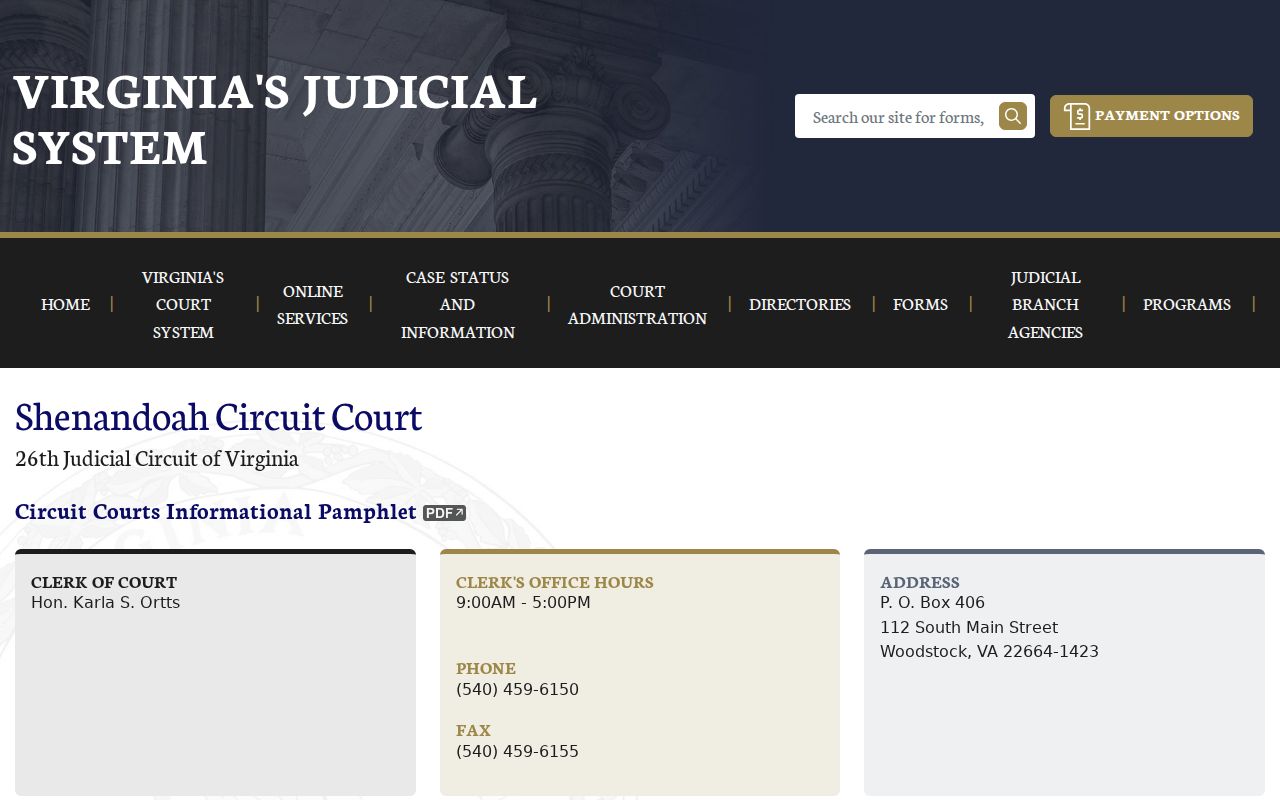 Court location information does not reveal a private case’s current enforcement status.
Inside a Shenandoah County Arrest Warrant
The field notes below rest on Virginia law, and real forms and online rows can look different. Shenandoah County displays no sample warrant for the public. Start with the issuing court and case number. Then ask that clerk which part of the record is public and what the next calendar event means for the case.
| Issuing officer or court | Identifies where the process began and who keeps the case record. |
|---|---|
| Person and offense | Names the subject and the alleged offense or legal citation shown. |
| Probable-cause basis | Relates to the judicial decision; it is not a verdict. |
| Command to officer | Sets the process direction and authorized execution. |
| Bail direction | May set a release condition, subject to the current order. |
| Return or later action | May be recorded by the court or the serving agency. |
Authorized Officers Review Shenandoah Cases
A magistrate and a clerk do different jobs in Shenandoah County. The magistrate reviews the initial process and may set bail. The clerk then keeps the court file as the case moves forward. The Commonwealth's Attorney prosecutes and helps victims with process questions, but that office is not the keeper of every warrant record. The Sheriff and town police may hold service details for their own agencies. To reach the courts directly, Karla S. Ortts is Clerk of the Circuit Court at 540-459-6150, and the Shenandoah GDC handles adult misdemeanor and traffic records at 540-459-6130. When you call, ask the court named on the paper which office applies.
Serving Arrest Warrants in Shenandoah County
Virginia Code § 19.2-76 governs execution and return. In Shenandoah, the officer at the door may come from the Sheriff's Office, a town police department, the Virginia State Police, or another authorized agency, depending on the order. The Sheriff's tactical team backs up high-risk service, while patrol handles the routine work. None of this predicts when or how a particular warrant gets served.
The process can be summarized this way: complaint → judicial review → warrant or other process → service or return → next court event. Keep the court record and the agency service record distinct.
The Virginia magistrate page explains the independent judicial role in process and bail. 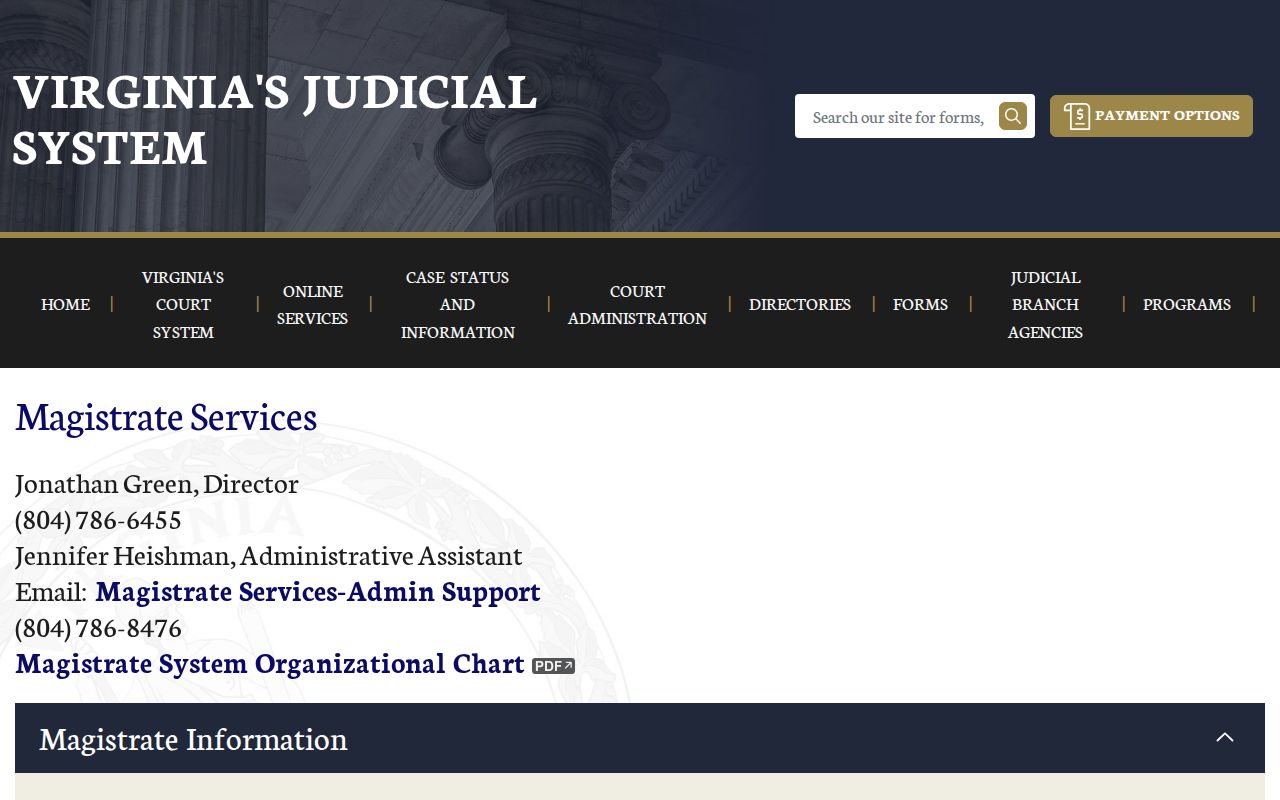 A magistrate is not the clerk for every later court file.
Shenandoah Service Has Several Agencies
The Shenandoah County Sheriff's Office sits at 810 North Main Street, Suite 1, in Woodstock, and answers agency questions about service or execution at 540-459-6100. Case-file questions go to the court clerk instead. That Circuit Clerk is at 112 South Main Street, Woodstock, and the GDC sits at 215 Mill Road. Separate offices, separate jobs.
Comparing Arrest, Summons, and Bench Warrants
These three terms are not interchangeable. An arrest warrant comes after a judge or magistrate reviews a complaint. A summons simply orders a person to appear. A capias, often called a bench warrant, is court-issued process that can follow a missed appearance or another court event. In Shenandoah County, the issuing court's own order explains the real reason and what response it demands.
| Type | Primary purpose | What to check |
|---|---|---|
| Arrest warrant | Authorizes arrest under stated terms | Complaint, issuing court, order |
| Summons | Directs appearance | Date, courtroom, instructions |
| Capias / bench warrant | Requires arrest or appearance by court process | Case event and next court step |
Virginia's Rule 3A:4 lays out warrant and summons procedure. Read it beside the actual Shenandoah County case record, not as a forecast of any single outcome.
Arrest Moves to Magistrate and RSW
After a warrantless arrest, Virginia Code § 19.2-82 requires prompt presentation before a magistrate or other judicial officer. The magistrate can then take up probable cause, release, or detention. What court event comes next depends on the case and the order. RSW Regional Jail in Front Royal holds detainees from Shenandoah, Rappahannock, and Warren counties. Its booking and facility contacts work for detention and release questions, not for running a warrant check, since the jail is no complete active-warrant database. Ask RSW or counsel about current bond procedures.
Federal Warrants Leave Shenandoah OCIS
Federal cases run on a separate court system. Shenandoah County sits in the Western District of Virginia, Harrisonburg Division, where PACER handles the public case search. A sealed warrant may simply not appear there. The county clerk, the Sheriff, and the state OCIS cannot certify that a sealed federal matter does not exist.
The Harrisonburg federal court page explains the local division. 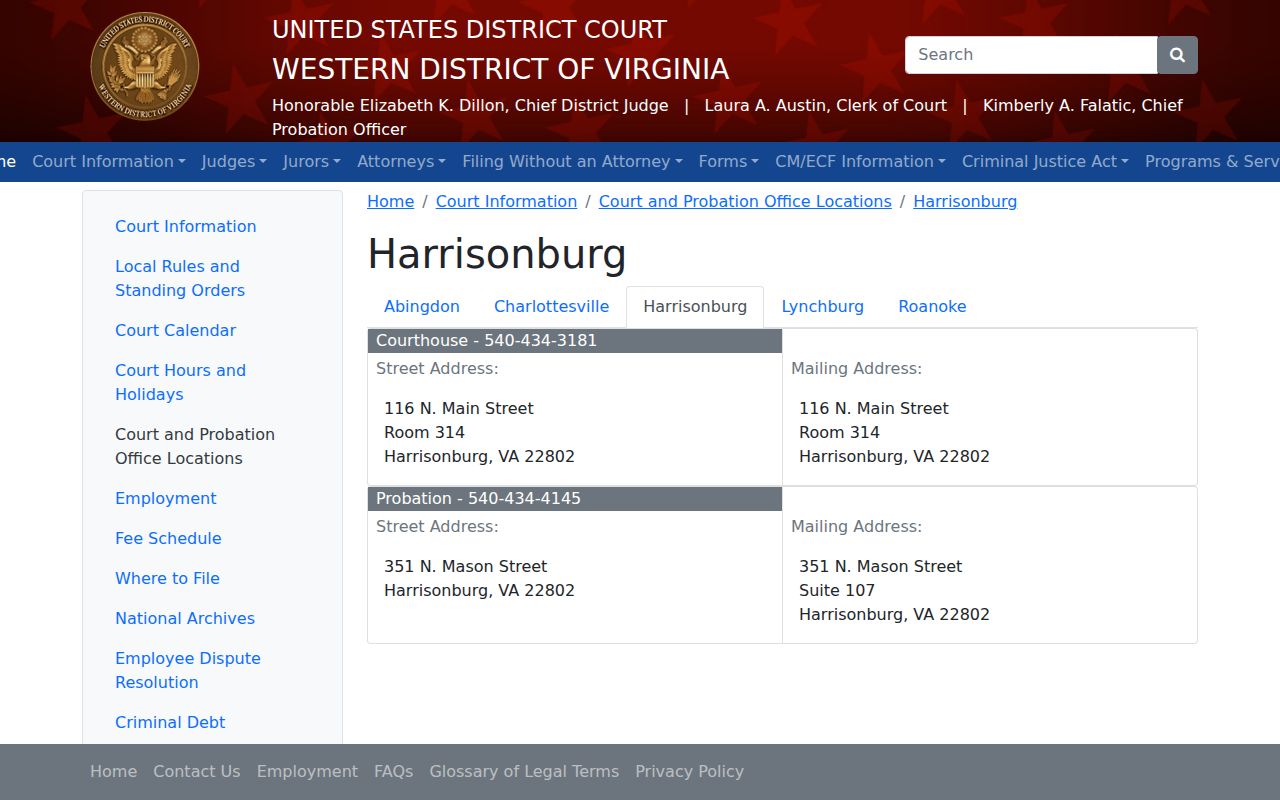 Federal court records are separate from Virginia county records.
PACER’s official search page describes party-name and case-number searches. 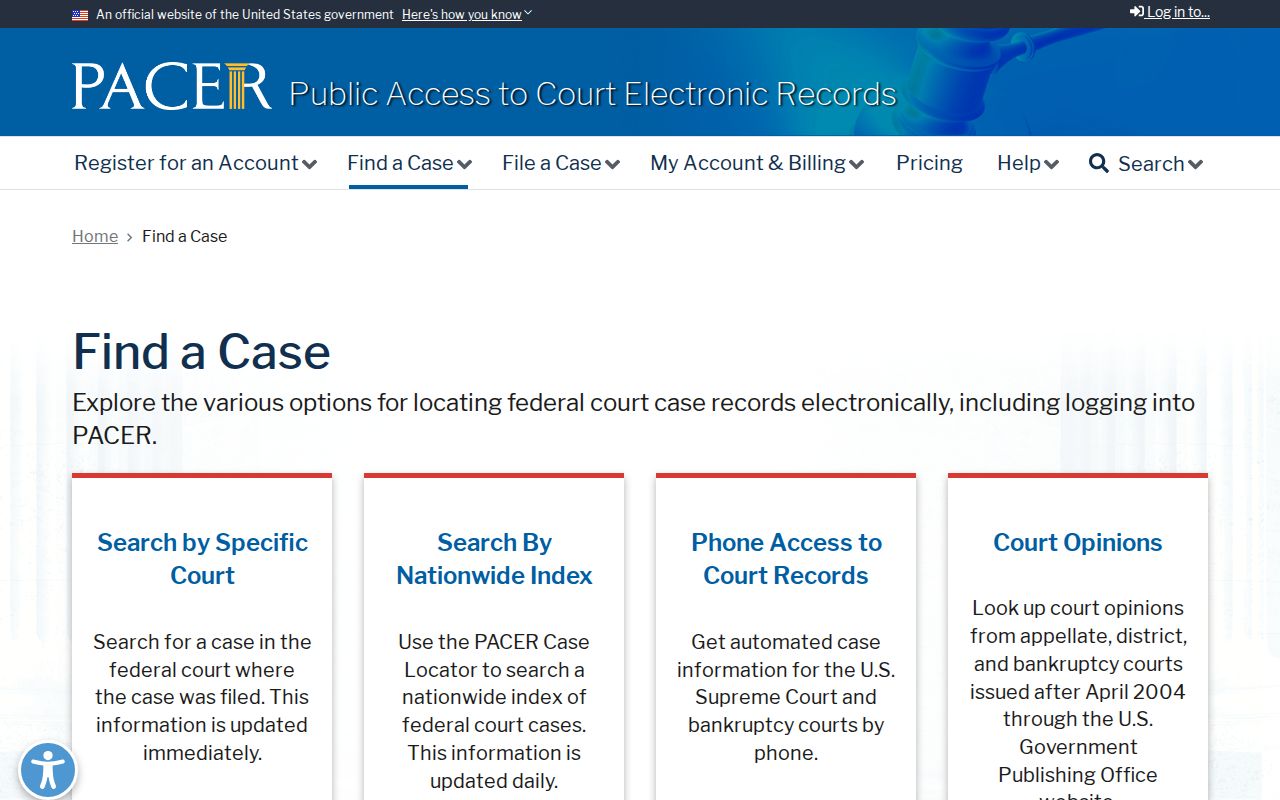 Registration, fees, and sealed-record limits apply.
If There's an Arrest Warrant for You
Look up your own case in OCIS first. Then call the clerk of the court named on the record, save the case number, and ask what event or filing comes next. A Virginia lawyer can sort out whether a motion, an appearance, or a bond question is in play. No single countywide form or process in Shenandoah County clears every active warrant; each one rests with the issuing court.
Get guidance first. The court controls its process, and the Sheriff cannot cancel a judicial order. Speak with counsel about a safe and lawful next step.
For a fuller sequence, the Shenandoah County warrant overview names the courts and agencies to contact.